
Fridge: Reduce door openings. Running it on 'low' or 'mid' cool, especially in colder weather, saves power. If it's an old fridge, have the door checked for costly air-leaks.
AC: "An AC is best installed under an outside shade or parapet," says Mili Majumdar of Delhi's Tata Energy Research Institute (TERI). It works much like its cousin, the fridge, so have all open gaps around windows, lofts and around the AC itself sealed off. Control sunlight with curtains or blinds. Keep the AC's exhaust shut. Setting its thermostat 'high' can be wasteful.
Washing machine: Reduce your weekly wash cycles by loading the machine to capacity. Front-loaders use less power and water than top-loaders. "A heater can consume five times more power," points out Dr V.B.Bhatia, professor of physics at Delhi University. Use the heater only for very soiled clothes and don't set it above 50ºC. A good detergent often eliminates the need for a hot-wash.
Lights: Tubes give much more light than bulbs of the same wattage. Hate their stark-white light? The new yellowish tubes mimic bulbs.
Fans: Switch to electronic regulators. They waste much less energy.
Iron: Dampen bone-dry clothes or use a steam-iron -- to finish faster," says Prof Bhatia.
Oven: Three cakes baked together doesn't use up much more power than baking just one.
Pressure cooker: After it starts to whistle, turn the flame down to "low," says TERI's Majumdar. This original PC is a home's best energy saver -- cook with it as far as possible. » Continue reading
Read more on Home


 People with arthritis are all to familier with pain's immobilizing effects. Yet an 18-month study suggest movement may be the medicine they require.
 Look into "me too" brands. Brand names often rule drug prices. For instance, the antibiotic ofloxacin marketed under the brand name Tarivid, is priced at Rs.53.14 per 400mg tablet; as Oflin it costs Rs.14. But as Floxur, it costs just Rs.9.60 per tablet! Ask chemists for less expensive alternatives. "But buying the cheapest," warns Dr Satbir Singh of New Delhi's Govind Ballabh Pant Hospital, "may not always be safe, since quality can vary." So, consult your doctor too.
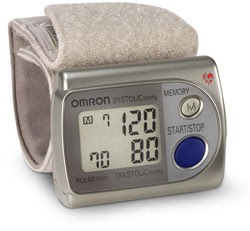 Your blood pressure read at a clinic provides a somewhat blurry snapshot of this temperamental measure. Worse, many people get white-coat hypertension -- their pressure jumps in a doctor's office! For a clearer picture, you need to take a series of readings -- a must for people with hypertension and those at risk of developing it.
 fits around your wrist and inflates with the push of a button. It makes tracking your blood pressure as easy as telling time. (People with severe circulation problems should check with a doctor first.) The monitor also stores readings so your doctor can look for patterns. It can be used anywhere without a white coat in sight.
 Exercise -- and you are better person. That's what university students thought when they rated characteristics of people they believed worked out. In a recent study, the students read profiles of fictional subjects described as "average looking." Some were supposedly exercisers and some non-exercisers -- but in other ways identical. Exercisers got higher rating for strength, health and attractiveness as well as for confidence, self-control, independence and hard work.
 By the time Debbie Clark took Adam, her autistic three year-old son, to a music therapist, he could barely speak. At the music-therapy clinic at California State University in Northridge, USA, therapists encouraged the autistic child to express himself by playing instruments and beating out rhythms on drums. They put conversations to song in order to get Adam talking.
 Newer Posts
